
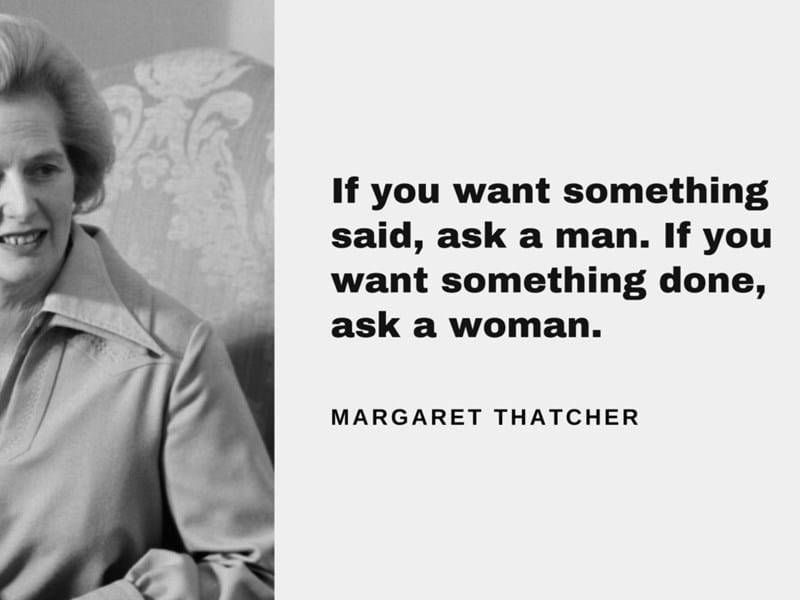
“Well-behaved women seldom make history.”
- Hazel Butterfield
- 20 March 2026
I have thoroughly enjoyed reading this latest collection of books and I feel that although they are all very different, they all need to be read for what they offer on reminding us of the incredible strength of women.
Tip of the ADHD Iceberg - Dr Samatha Hiew
Tip of the ADHD Iceberg is one of those rare books that manages to be revelatory, validating, and quietly radical all at once. Dr Samantha Hiew—founder of ADHD Girls and a leading voice in neurodiversity and women’s health—uses her expertise and lived experience to illuminate not just what ADHD is, but what it *feels like* to live with it in a world that still misunderstands it.
The book lands at a moment when demand for ADHD assessments has surged far beyond the NHS’s capacity. With over half a million people now waiting for an assessment, and growing reliance on private providers, Dr Hiew lays bare the consequences of rising awareness without matching infrastructure. She describes a “diagnostic gold rush,” where inconsistent assessments, unregulated pathways, and limited follow‑up care can leave people more vulnerable than supported. Her analysis is clear-eyed: the NHS is overspending by £164 million a year on ADHD, yet many people—especially women and those with complex neurotypes—still fall through the cracks. The result is a landscape where iatrogenic harm (harm caused by treatment rather than the condition) becomes a real risk.
Although the book focuses on women’s ADHD, its insights resonate far beyond gender. Dr Hiew shows how women, in particular, are disproportionately affected by unregulated diagnostic routes, cultural expectations, and decades of being misread or dismissed. Many women interviewed in recent studies, she notes, described profound relief and self-acceptance after a late diagnosis—finally understanding that they were not “self-sabotaging hot messes,” but people whose brains had been working differently all along. That line alone felt like a mirror held up to my own experience. Despite the depth of research and policy analysis, the book flows with the ease of a novel. I found myself screenshotting passages, going down rabbit holes, and pausing often to reflect on things I’ve slowly been realising over the past two or three years. It’s both educational and deeply human.
One of the book’s most powerful threads is the idea that understanding ourselves is inherently empowering. ADHD exists on a long spectrum, and most of us sit somewhere along that line, shaped not only by neurology but by nurture: how our central nervous system has adapted to our environments, our traumas, our expectations.
Tip of the ADHD Iceberg is more than a book—it’s a compass. It helps you locate yourself within a spectrum that is far broader and more nuanced than most people realise. Whether you’re neurodivergent, supporting someone who is, or simply curious about the shifting landscape of ADHD, this is absolutely one not to miss.
Beyond Palatable - by Sophie Jane Lee
Beyond Palatable is one of those rare books that doesn’t just ask you to rethink your life—it demands it. With sharp clarity and a refreshing refusal to sugar‑coat, Lee explores what it means to live authentically in a world that constantly nudges us toward dilution, conformity, and smallness.
A standout section of the book is Lee’s breakdown of the archetypes of palatability—the roles we slip into to be liked, accepted, or tolerated. She dissects these personas with precision, showing how they shape our behaviour, our relationships, and even our ambitions. It’s confronting, because it forces you to ask: “Who am I when I’m not trying to be digestible?”. Sophie also introduces what she calls the “Batman effect”—the ability to step into a version of yourself that is bolder, braver, and less apologetic than the one you’ve been conditioned to perform. It’s not about pretending; it’s about accessing the parts of yourself you’ve been taught to mute. This idea feels especially resonant for anyone who has spent years being “the strong one,” “the agreeable one,” or “the one who doesn’t make waves.”
One of the book’s central themes is that truth is often uncomfortable, and people will disparage conversations that force them to confront their own failings. Lee doesn’t shy away from this. Instead, she leans into the discomfort, arguing that the resistance we face—externally and internally—is often a sign we’re finally touching something real. Reading this felt deeply personal. Like Lee, I’ve only recently become less apologetic about who I am, and it’s strange how people sometimes struggle to accept the version of you that is no longer shrinking. Severing relationships that kept me “less than” has been painful but necessary—another theme Lee captures with honesty and compassion.
Beyond Palatable is not a gentle read, but it is a necessary one. Sophie challenges you to stop sanding down your edges and start examining the systems—internal and external—that taught you to do so in the first place. It’s a book for anyone who is tired of being digestible, tired of decorating their prison cell, and ready to step into a fuller, freer version of themselves. It’s bold, unflinching, and deeply liberating. If you’re ready to confront yourself—and emerge stronger—this book is a must‑read.
Have a listen to our chat on my Riverside Radio show…
Bat Eater - Kylie Lee Baker
Bat Eater is one of those rare books that refuses to sit neatly in a single category. It’s unsettling, lyrical, and strangely beautiful — the kind of story that lingers in the mind long after you’ve closed the final page. What makes it so compelling is the way it blends the visceral with the introspective, turning a narrative that could easily have been sensational into something far more thoughtful and resonant.
The book’s greatest strength lies in its atmosphere. From the opening chapters, the world feels thick with tension — not the loud, dramatic kind, but the quiet, creeping sort that seeps into the corners of everyday life. The author has a gift for sensory detail: the textures, the shadows, the small, telling gestures that reveal more about a character than pages of exposition ever could. The protagonist is equally memorable. Flawed, searching, and often caught between instinct and conscience, they anchor the story with a raw honesty that makes even their most questionable choices feel understandable. Their journey — part survival, part self‑reckoning — unfolds with a slow burn that rewards patience. Nothing is rushed, and nothing is wasted.
What surprised me most is how much emotional depth the book carries beneath its darker themes. There’s a tenderness here, a sense of longing and vulnerability that cuts through the grit. Moments of connection, regret, and fragile hope give the narrative a human pulse that keeps it from tipping into bleakness. Stylistically, the writing is bold. The prose is sharp and rhythmic, sometimes almost poetic, and the imagery is vivid without ever feeling overwrought. It’s clear the author trusts the reader — scenes are allowed to breathe, metaphors are allowed to echo, and the story unfolds with a confidence that makes the experience immersive.
Bat Eater won’t be for everyone. It’s intense, sometimes uncomfortable, and unafraid to explore the darker corners of human nature. But for readers who appreciate fiction that challenges as much as it entertains, it’s a striking, memorable work — the kind of book that sparks conversation and invites reflection. A haunting, beautifully crafted read that rewards those willing to step into its shadows.
No Oil Painting - Genevieve Marenghi
What makes No Oil Painting so compelling is the way Genevieve Marenghi anchors her story in a vivid sense of place, and nowhere is that more powerful than in her use of Ham House. The building isn’t just a backdrop; it becomes a kind of emotional echo chamber for the female protagonist — a space where history, silence, and expectation press in on her from every side. Genevieve captures Ham House with a painter’s eye: the stillness of its rooms, the weight of its architecture, the way the past seems to seep through the walls. It’s a setting that mirrors the protagonist’s inner life — elegant on the surface, but full of shadows, secrets, and unspoken tensions. The house becomes a metaphor for the constraints placed on Maureen, its main character, both by family and by the social world she’s navigating. Maureen is one of the novel’s greatest strengths. She’s observant, sharp, and quietly defiant, even when she doesn’t yet recognise her own strength. No oil painting is written with a tenderness that never slips into sentimentality. Instead, we see a woman trying to understand who she is in a world that has already decided who she should be.
What’s especially striking is how the novel balances the protagonist’s vulnerability with her resilience. She is shaped by her surroundings, but not defined by them. Ham House may loom large, but it never overshadows her. Instead, it becomes the place where she begins to see herself clearly — not as others have painted her, but as she truly is. No Oil Painting is ultimately a story about identity, inheritance, and the quiet courage it takes to step out of the frame others have placed you in. especially that crucial element of women becoming seemingly invisible with age and the power that can give!
Through the interplay of a richly evoked setting and a deeply human central character, Marenghi creates a narrative that is both intimate and resonant. A thoughtful, atmospheric, and beautifully crafted novel.